What Is an Online Payment Gateway and How Does It Work? 

Online payment gateways are digital platforms that allow businesses to accept payments over the internet. In 2025, with the rapid growth of e-commerce and global transactions, understanding how payment gateways work is more important than ever. This article explains what a payment gateway is and how it operates.

Samuel  D’Souza
Samuel D’Souza·Marketing Lead
Updated: May 14, 2026
9 minutes to read
what is payment gateway

What is a Payment Gateway? 

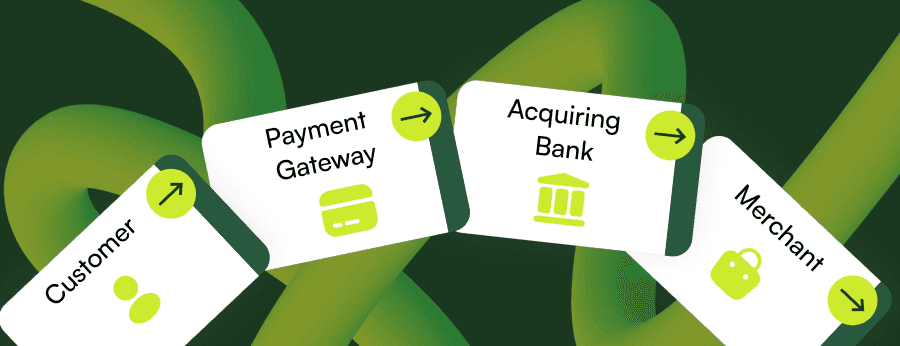
A payment gateway is a technology that connects a merchant’s website with the payment processing system. Its main function is to securely process digital transactions — essentially acting as the online equivalent of a physical card terminal.

The payment gateway encrypts the customer’s card details and sends the information through the payment processing network. The system then communicates with the issuing bank to approve or decline the transaction, completing the payment process in just a few seconds.

Key Function 

Data Collection and Encryption

The gateway first collects the customer’s payment information and encrypts it to ensure maximum security.

Secure Data Transmission

Next, it transmits the encrypted data to the merchant’s payment processor or acquiring bank through a secure connection.

Authorization Request

The gateway then simplifies the authorization process by automatically contacting the card network and the customer’s issuing bank to request payment approval.

Settlement and Refund Handling

Once approved, the gateway facilitates the settlement — transferring funds to the merchant’s account. It also processes refunds or cancellations when required.

Players Involved in the Payment Gateway Ecosystem 

Customer (Buyer)

initiates the payment by entering their details and submitting the transaction request.

Merchant (Seller)

the business offering products or services. The buyer connects to the payment system through the merchant’s website or app.

Payment Gateway

securely collects the customer’s payment information and routes the transaction to the payment processor on behalf of the merchant.

Payment Processor

communicates with banks and card networks to process the payment and move the transaction through the system.

Acquiring Bank

the merchant’s bank that receives the transaction request from the gateway and forwards it to the card network.

Issuing Bank

the customer’s bank that reviews the request and either approves or declines the transaction.

Card Network

the card association (such as Visa, Mastercard, or Amex) that connects the acquiring and issuing banks, setting the rules and fees for each transaction.

How Does a Payment Gateway Work? 

1
Step 1 – Customer enters payment information

The customer provides payment details through the checkout form — typically the card number, expiration date, and CVV code. The gateway then encrypts this sensitive data to ensure security.

2
Step 2 – Authorization request

The encrypted data is sent to the payment processor, which routes it through the card network to the issuing bank. The issuing bank checks the account balance and verifies the transaction details before approving or declining the payment.

3
Step 3 – Response and settlement

The payment gateway receives the bank’s response and sends it back to the merchant’s website, notifying the customer whether the payment was successful. If approved, the transaction is confirmed and settlement begins — transferring funds to the merchant’s account.

Types of Payment Gateways 

Hosted Payment Gateways 

Hosted payment gateways redirect the buyer to a secure third-party checkout page, such as those offered by PayPal or Stripe Checkout. The customer enters their card information on this external page, completes the purchase, and then is redirected back to the online store. One of the major benefits is that the merchant doesn’t collect or store sensitive payment data, which significantly reduces PCI-DSS compliance burden.

Self-Hosted Payment Gateways 

With this type of gateway, the payment form is hosted directly on the merchant’s website. Customers enter their payment details on the site, and the information is securely transmitted to the gateway’s server in the background for processing.

To ensure safety, the merchant’s website must use HTTPS and an active SSL certificate, which encrypts all sensitive payment data. Many popular e-commerce platforms, such as WooCommerce and Magento, support this self-hosted approach for greater control over the checkout experience.

API-Hosted Payment Gateways  

API-hosted payment gateways provide developers with programming interfaces that allow payments to be integrated directly into a website or mobile app. There is no redirection or pre-built checkout form — the merchant’s application collects payment details via secure API calls.

This approach offers a seamless and fully customizable payment experience for users but requires more development resources and strict adherence to security standards. Providers such as Stripe and Braintree offer API-based integrations that give merchants complete control over the checkout process.

Local Bank Integration Gateways 

Local bank integration gateways provide access to regional payment methods and domestic card networks, allowing businesses to accept payments from local customers more easily. However, when expanding into new markets, businesses may encounter higher transaction fees — a common practice in the industry.

These gateways can operate as hosted or API-based solutions, depending on the bank’s infrastructure and integration model.

Key Features of a Payment Gateway 

Security and Data Encryption 

The most famous is SSL/TLS, but leading gateways continuously update encryption algorithms. Payment gateways use PCI DSS Level 1 certification and support tokenization. This means that even if data is intercepted, it is useless to attackers. For buyers, it guarantees card safety; for businesses, it protects brand reputation.

Fraud Detection and Prevention 

Analyzing buyer behavior is possible thanks to machine learning models. Also available device fingerprints, and geolocation in real-time to predict fraud risk. The result: fewer chargebacks, lower penalty costs, and higher approval rates. 

Multi-Currency and Global Support 

Global commerce demands multi-currency support. A gateway manages conversions, connects merchants to local payment networks, and makes selling in Asia, LATAM, or Africa as simple as in the home market. This allows businesses to start expansion, creating international payment opportunities.

Seamless User Experience 

The checkout flow has become part of the sales funnel itself. Features like Apple Pay, Google Pay, and local wallets, mobile-optimized forms, and saved card information make the process easier. Customers focus on the product and conversion rates grow. 

Reporting and Analytics  

Merchants can track in real time which banks decline more transactions, which regions perform better, and which payment methods deliver the best results. This shifts decision-making guesswork to data-driven strategy. 

Smart Routing 

With smart routing, transactions are automatically directed to the acquirer most likely to approve them. Based on factors like GEO, card type, and issuer performance. This significantly reduces decline rates and maximizes revenue without extra effort from the merchant. 

Recurring Billing and Subscription Management 

This feature allows a payment gateway to set up automatic regular payments. Customers can subscribe online, and the gateway automatically charges their card or wallet every month. If a payment fails, the system reties the charge or sends a reminder. It’s convenient for business, and for clients, because there is no need to re-enter payment data or approve each transaction manually. 

White-label Gateways 

It is a ready-made platform under your own brand. The payment service provider gives you a complete payment system. Your business uses it with logo, colors, and style, so for the clients it looks like native company solution. Meanwhile, the provider takes care of security, updates, and certifications, like PCI DSS. 

what is payment gateway

How Can a Payment Gateway Benefit My Business?

Using a payment gateway offers several advantages for merchants:

Of course, security. Customers feel safer when payments are handled by a reputable gateway with robust security. Protecting sensitive card data builds trust and can increase the likelihood of purchase.

Next benefit – speed. Transactions are processed in seconds. You get real-time authorization, which means faster order fulfillment. An automated transaction process also reduces errors and manual work compared to handling payments offline.

Another important benefit for merchants is the availability of multiple payment methods. A gateway lets you offer various options: credit cards, debit cards, digital wallets, etc. So each buyer can use their preferred payment method. Catering to more payment options can lead to more completed sales.

Global reach: merchants can easily accept payments from international customers. The gateway handles currency conversion and connects to global networks, allowing a small business to sell worldwide without setting up special bank accounts.

Better Customer Experience: A quick checkout powered by a gateway leads to higher customer satisfaction. Features like one-click payments or saved details make it convenient, which can reduce cart abandonment and encourage repeat business.

Ready to Accept Online Payments?

How Payment Gateways Ensure Security

Tokenization

Sensitive card data is replaced with a random token. The gateway stores the actual card details securely and provides a token to the merchant. That way, even if someone intercepts the data, it’s meaningless to them. Tokenization ensures the merchant never handles raw card numbers.

3D Secure Authentication

This system, such as Visa Secure or Mastercard Identity Check, adds an extra verification step for the cardholder during checkout. It might prompt the customer to enter a one-time code or password from their bank, making sure the legitimate card owner is the one making the payment.

PCI DSS Compliance

Gateways must follow the strict rules of PCI DSS to handle card information safely. Ensure the gateway you choose is PCI DSS Level 1 compliant, which means it meets the highest security standards. By using a compliant gateway, you significantly reduce the risk of data breaches and benefit from its certified infrastructure.

Fraud Prevention Tools

Gateways also provide risk-management features. A payment gateway verifies details such as the billing address and CVV code and uses algorithms to flag unusual purchasing patterns. Many gateways let merchants set custom filters or limits. For example, it can block high-risk regions or unusually large transactions to proactively prevent fraudulent charges.

Payment Gateway Costs and Fees

While implementing a gateway is crucial, it’s important to understand the costs involved. Payment gateways usually charge fees such as:

Common Fees

Typical charges include a setup fee (sometimes waived), transaction fees. Around 2,5–3% of each transaction amount, plus a small fixed fee like $0.30, and possibly a monthly service fee. There may also be fees for things like chargebacks or currency conversion if you accept payments from other countries.

What Affects Pricing

Rates can vary depending on your business profile. High-volume merchants or low-risk industries might negotiate better per-transaction prices. Riskier businesses could face higher fees or reserves. The types of payments and the regions you sell to can also influence cost.

Future of Payment Gateways in 2026

Digital payment technology is rapidly evolving. Payment gateway technology is incorporating AI and machine learning to detect and prevent fraud in real time, making transactions safer.

Payments are becoming more integrated into apps and platforms. Gateways are leveraging open banking APIs to enable direct bank payments and smooth in-app checkout experiences, reducing the need for redirects.

Don’t forget about cryptocurrencies and alternative payments. Gateways are starting to process crypto transactions and continually adding new alternative payment methods as consumer preferences expand.

Moreover, online and offline payment solutions are converging. One platform may soon handle in-store POS and e-commerce together. In this unified approach, payment gateways enable merchants to manage all transactions: web, mobile, and in-person, in one system, providing a 360-degree view of sales and inventory.

Conclusion

In summary, payment gateways facilitate online transactions by acting as a secure intermediary between customers and merchants. They handle the heavy lifting of encryption, authorization, and fund transfer, which allows merchants to confidently accept online payments without exposing sensitive data. 

A reliable gateway acts as a shield against fraud, while also providing a smooth checkout that can boost customer confidence and sales. As online commerce continues to grow, having the right payment gateway is vital for building trust and scaling your business in a secure, efficient way.

what is payment gateway

Frequently Asked Questions (FAQs)