What Is AML and KYC? Differences, Checks, and Compliance Explained

Anti-Money Laundering (AML) refers to the full set of regulatory processes designed to prevent criminals from disguising illegal funds as legitimate income. Know Your Customer (abbreviated KYC) is a core component of the AML framework, referring to the process of verifying customer identities and assessing risks both before and for the full duration of a business relationship. These two mechanisms help financial institutions and payment service providers prevent financial crime, avoid regulatory fines, and maintain trust in the financial system. The implementation of AML controls requires adopting a risk-based approach, and understanding these two terms is the primary prerequisite for building a compliant customer onboarding process.

Samuel  D’Souza
Samuel D’Souza·Marketing Lead
Updated: July 07, 2026
8 minutes to read
what is aml and kyc

What Is KYC?

KYC (Know Your Customer) is a widely used compliance management mechanism in the financial sector, applicable to all types of merchants and fintech companies. To implement KYC, relevant entities must first collect customers’ name, address, date of birth, and official ID number, verify these details against trusted sources, then carry out ongoing due diligence, risk assessment, and regular customer reviews. The entire process must leave traceable, auditable records; enhanced due diligence must be implemented for high-risk customers. Properly executed KYC can reduce fraud risks, meet regulatory requirements, and build a secure industry ecosystem. In contrast, the absence of KYC leaves entities unable to identify their service users, and increases the likelihood of suffering from financial crimes.

What Is AML?

AML or anti-money laundering refers to the entire system of laws, monitoring, and reporting designed to detect and prevent financial crime. Anti-Money Laundering (AML) is not limited to completing only initial identity verification; rather, it is a set of legal, regulatory and internal control frameworks covering the full lifecycle of money laundering, that encompasses core operational requirements including transaction monitoring and suspicious activity reporting. Global AML standards are formulated by the Financial Action Task Force (FATF), which countries transpose into their local legislation. For financial institutions to build an effective AML program, they must equip themselves with supporting systems, staff training, independent audits and customer due diligence modules, while also accounting for counter-terrorism financing prevention, and adhering to the risk-appropriate principle. Most jurisdictions mandate mandatory watchlist screening, and the absence of a comprehensive AML solution will leave enterprises exposed to money laundering risks.

AML vs KYC: What’s the Difference?

Understanding the key differences between AML and KYC helps compliance teams allocate resources correctly. Anti-Money Laundering (AML) and Know Your Customer (KYC) in the financial compliance field are often confused. Their core differences can be clarified across four dimensions: scope, timing, purpose, and frequency. KYC is an identity information collection and verification step carried out only during the customer onboarding stage and at regular intervals afterwards, serving as a key subset and core tool of AML. In other words, KYC is a subset of the broader AML framework. AML, by contrast, is an overarching compliance framework that covers KYC, ongoing transaction monitoring, enhanced due diligence, and suspicious activity reporting, with its monitoring work operating on a continuous basis. Accurately distinguishing between the two can help B2B entities allocate compliance resources reasonably. Failure in any part of either process will lead to regulatory fines and reputational damage, so enterprises must build both a sound upfront KYC system and a continuous AML monitoring mechanism. For businesses handling high‑volume payments, a b2b payment gateway must be paired with robust AML and KYC checks.

How AML and KYC Work Together in Customer Onboarding

Standard Anti-Money Laundering (AML) and Know Your Customer (KYC) processes are launched prior to customer onboarding. First, Customer Due Diligence (CDD) is conducted, covering identity verification, negative media screening, and Politically Exposed Person (PEP) screening. This stage integrates two categories of compliance checks, with differential treatment applied based on risk levels: low-risk customers may complete onboarding after passing standard CDD, while high-risk customers must complete Enhanced Due Diligence (EDD) that includes in-depth background checks. After customers are onboarded, the process shifts to ongoing transaction monitoring to detect abnormal patterns linked to money laundering. 

The full process requires regular documentation and review. When an alert is triggered, the compliance team must submit a Suspicious Activity Report (SAR). This unified risk management closed loop, which requires cross-team collaboration among the customer onboarding, risk, and fraud teams, is the practical operating standard for Payment Service Providers (PSPs) and online marketplaces. An instant settlement payment gateway speeds up fund movement, but only if paired with effective AML and KYC checks to prevent fraud. Without a robust AML and KYC framework, platforms risk being used for money laundering.
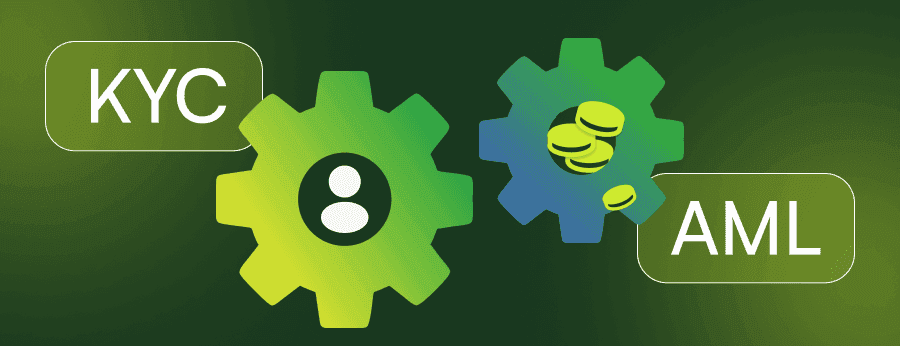
KYC checks typically include:

ID verification – passport, national ID, driver’s license.
Proof of address – utility bill, bank statement.
Beneficial ownership – identifying individuals who ultimately own or control a legal entity.
Sanctions screening – checking against government sanction lists.
Adverse media – scanning for negative news or legal issues.

AML checks add continuous monitoring:

Transaction monitoring – flagging unusual volumes, velocity, or patterns.
PEP screening (part of onboarding and ongoing).
Suspicious activity reporting (SAR) to authorities.

All anti-money laundering (AML) reviews must be appropriately adjusted to align with business type, jurisdiction, and risk level. Regulated payment entities must adopt a risk-based framework, and implement customer onboarding and regular know-your-customer (KYC) screening requirements that match their respective risk levels. For merchants in high‑risk sectors, a 2d secure payment gateway can help reduce friction while maintaining compliance, but never replaces proper KYC and AML checks. Comprehensive AML programs also include employee training and independent audits.

Common AML/KYC Documents and Data Points

For an individual:

  • Government‑issued photo ID (passport, national ID)
  • Proof of address (utility bill, bank statement)
  • Tax identification number (where applicable)

For a business entity:

  • Corporate registration documents (certificate of incorporation)
  • Beneficial ownership declarations (individuals with >25% ownership)
  • Proof of address for the registered office
  • Tax identifiers (EIN, VAT number)
  • Director/UBO identification documents

The compliance team, relying on data collected during the user onboarding stage, can verify the legitimacy of relevant entities and assign risk scores; any missing or inconsistent materials will trigger a risk alert. A robust know-your-customer (KYC) process is the core foundation for the effective operation of anti-money laundering (AML) frameworks.

What is aml and kyc

Why AML and KYC Matter for Businesses

Many financial institutions only view AML and KYC compliance as nothing more than a regulatory burden, but in reality, this compliance affects operational performance, and can prevent fraud while reducing regulatory risks.

Fraud prevention – Catching bad actors before they cause losses.
Regulatory risk reduction – Avoiding fines from non‑compliance with AML law and KYC regulations.
Trust – Banks, partners, and customers prefer to work with compliant businesses.
Operational stability can prevent account freezes and terminations caused by compliance issues.

For payment service providers and fintech firms, non-compliance with anti-money laundering (AML) regulations exposes them to fines, loss of banking partnerships, and even criminal charges. That is why KYC and AML are essential for long‑term operational stability. The implementation of know your customer (KYC) requirements relies on automation, regular audits, and employee training. Robust compliance can build competitive advantages and enable smooth cross-border expansion, and KYC serves as the core foundation of all AML frameworks.

Which Businesses Need AML and KYC?

Any business that handles financial transactions or customer funds is subject to AML regulations to some degree. Most critical are:

  • Financial institutions (banks, credit unions)
  • Payment service providers (PSPs, payment gateways)
  • Fintech companies (digital wallets, crypto exchanges)
  • Money service businesses (MSBs)
  • Marketplaces that process payments on behalf of sellers
  • Gambling and iGaming platforms

Even if they are not directly covered by official regulatory oversight, most merchants are still required to submit Know Your Customer (KYC) materials to payment service providers to meet the requirements of their partner banks. All merchants that operate legitimate, long-term payment businesses must comply with KYC and Anti-Money Laundering (AML) requirements. While AML rules vary across countries, their core tenets are consistent. KYC compliance is a universal precondition for opening a merchant account.

What is aml and kyc

Common AML and KYC Compliance Challenges

False positives – Legitimate transactions flagged as suspicious, creating extra manual work.
Manual review – Lack of automation slows onboarding and frustrates customers.
Customer friction – Lengthy KYC processes increase drop‑off rates.
Cross‑border onboarding – Different countries have different identity document standards.
Data freshness – Keeping customer information up‑to‑date is resource‑intensive.

Financial institutions that carry out anti-money laundering (AML) compliance work will face heavy penalties if they commit violations. Their relevant policies must be updated on a regular basis to adapt to new regulatory rules, and the implementation of compliance work often encounters operational bottlenecks. Institutions can leverage automation technology to reduce manual workload and false positive rates while guaranteeing security, improve their Know Your Customer (KYC) processes to prevent downstream problems, and keep their core information free of redundancy.

How Technology Helps Streamline AML and KYC

Automation – API‑driven identity verification services check documents in real time.
Machine learning – Helps reduce false positives by learning transaction patterns.
Biometrics – Facial recognition and liveness checks for remote onboarding.
Monitoring systems – Continuous transaction monitoring with rule‑based alerts.
API integrations – Connect directly to sanction lists, watchlists, and credit bureaus.

The white label payment gateway solution comes with built-in AML and KYC configuration modules that can be adjusted to match custom risk tolerance levels. Third-party service providers can offer three types of compliance services: automated identity verification, document review, and continuous monitoring. Enterprises that integrate this dedicated solution can compress their compliance cycle from days to minutes, and large-scale, widespread implementation of compliance efforts must rely on technical support. White label payment gateway solution enables you to embed these checks seamlessly into your checkout flow. Modern KYC and AML programs rely on automated data collection, biometrics, and machine learning to reduce manual review time.

Frequently Asked Questions