What Is a Payment Gateway API?
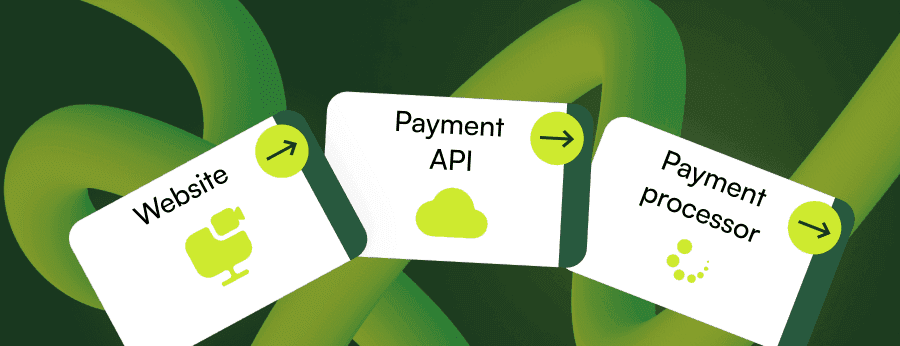
Payment gateway API allows a merchant to integrate a website or application with a payment gateway and securely accept payments. It sits between the frontend and the payment system, receives payment details, formats them, and sends them for authorization.
Payment API is a set of tools, including endpoints and documentation. Payment gateway is the service that communicates with financial institutions and performs settlements. Online payment API provides functions, while the gateway manages transactions. By using api integrations, you can accept credit and debit cards, digital wallets, and bank transfers.
Payment gateway apis help businesses quickly add new methods and maintain process predictability. You can accept only cards or also support debit cards and wallets – the API adapts. You focus on the product, while APIs abstract the complexity.
How Does a Payment Gateway API Work?
The basic transaction process includes these steps:
- The customer initiates an online payment.
- The merchant system sends an api call to the payment gateway.
- The API tokenizes and protects transaction data.
- The issuing bank authorizes or declines the transaction.
- The system confirms the payment and completes settlement.
It tokenizes the data, preventing sensitive information to form a clean message for payment processor. The gateway sends the payload to both the processing center and the issuing bank. These banks verify out funds, risks, and 3-D secure. The payment gateway should return either an authorization code or a decline. Synchronous response or a webhook is received in your system. You then record the successful payment, ship the product and initiate settlement. These payment flows are replicated thousands of times every day.
Security Measures in Payment Gateway APIs
Protection against data breach may be ensured by encrypting during transmission (for example, through TLS) and tokenization during storage. 3-D Secure is activated if risk score is high. This mechanism allows merchant to get secure payment processing without the burden on designing custom crypto modules.
Compliance is also important. Providers comply with the relevant industry regulations, such as PCI DSS for cards or GDPR for personal data. This is the foundation of fraud prevention. Device signals, velocity, and ML help identify detect and prevent fraudulent transactions using the latest tools. Secure data exchange also mitigates the risk of leaks and fines, and eases support.