Payment Gateway API: How It Works, Key Features, and How to Integrate It

Online payments are completed in seconds. Payment gateway API connects your website or application with a payment gateway and securely transfers data: encrypts it, sends it for authorization, and returns an approval or decline. For a merchant, this layer increases conversion, speeds up the addition of a payment method, and keeps fees under control. Tokenization, TLS, and 3-D Secure reduce the risk of data breaches. The result is reliable processing of financial transactions and convenient digital payment for customers.

Samuel  D’Souza
Samuel D’Souza·Marketing Lead
Updated: May 07, 2026
4 minutes to read
payment gateway api

What Is a Payment Gateway API?

Payment gateway API allows a merchant to integrate a website or application with a payment gateway and securely accept payments. It sits between the frontend and the payment system, receives payment details, formats them, and sends them for authorization.

Payment API is a set of tools, including endpoints and documentation. Payment gateway is the service that communicates with financial institutions and performs settlements. Online payment API provides functions, while the gateway manages transactions. By using api integrations, you can accept credit and debit cards, digital wallets, and bank transfers.

Payment gateway apis help businesses quickly add new methods and maintain process predictability. You can accept only cards or also support debit cards and wallets – the API adapts. You focus on the product, while APIs abstract the complexity.

How Does a Payment Gateway API Work?

The basic transaction process includes these steps:

  • The customer initiates an online payment.
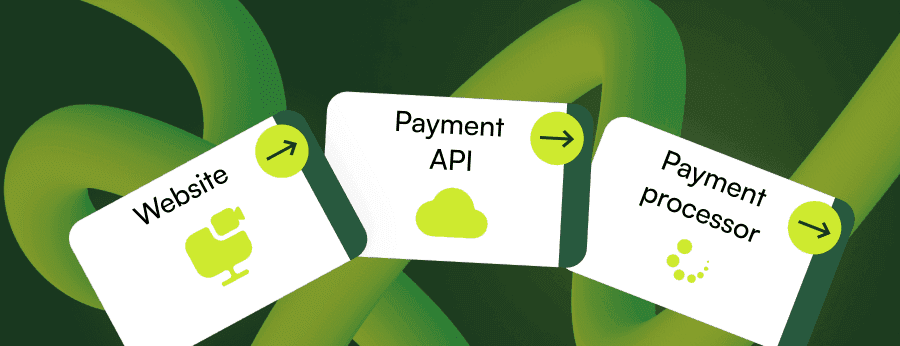
  • The merchant system sends an api call to the payment gateway.
  • The API tokenizes and protects transaction data.
  • The issuing bank authorizes or declines the transaction.
  • The system confirms the payment and completes settlement.

It tokenizes the data, preventing sensitive information to form a clean message for payment processor. The gateway sends the payload to both the processing center and the issuing bank. These banks verify out funds, risks, and 3-D secure. The payment gateway should return either an authorization code or a decline. Synchronous response or a webhook is received in your system. You then record the successful payment, ship the product and initiate settlement. These payment flows are replicated thousands of times every day.

Security Measures in Payment Gateway APIs

Protection against data breach may be ensured by encrypting during transmission (for example, through TLS) and tokenization during storage. 3-D Secure is activated if risk score is high. This mechanism allows merchant to get secure payment processing without the burden on designing custom crypto modules.

Compliance is also important. Providers comply with the relevant industry regulations, such as PCI DSS for cards or GDPR for personal data. This is the foundation of fraud prevention. Device signals, velocity, and ML help identify detect and prevent fraudulent transactions using the latest tools. Secure data exchange also mitigates the risk of leaks and fines, and eases support.

How to Integrate a Payment Gateway API

1
Step 1: Choose a reliable payment gateway provider

Analyze markets, supported payments methods/currencies, SLA and documentation Check uptime history.

2
Step 2: Set up developer credentials and sandbox environment

Create keys, activate webhooks, and read the quickstart. Use test cards for validation.

3
Step 3: Make your first API call (e.g., create a transaction request)

Create a transaction object but with minimum fields Use tokenization for raw card data storage.

4
Step 4: Handle responses and implement error codes

Handle authorization statuses, declines, and retries. Standardize error codes and timeouts. Idempotency is your friend.

5
Step 5: Test, monitor, and go live with production keys

Configure alerts for Delays, Declines and Webhooks. Once QA is done, move to production keys. Have a rollback plan.

payment gateway api

Choosing the Best Payment Gateway API

Simplifying integration and documentation quality.
Country Currency (Supported country, the currency, and payment method)
Transaction fees and processing speed.
Your training goes to October Data. Security & reliability including uptime 2023
Availability of support.

Examples of Common Payment API Calls

  • New Transaction – starts a transaction and asks the bank for approval.
  • Refund Payment – A return of money to the customer because something went wrong with their order.
  • Store Customer Data in a Secure Way

Ready to Accept Online Payments?

  • Fraud detection and risk scoring using AI & ML.
  • API-first platforms for unified operations.
  • Integration with open banking and instant payments.
  • More global compatibility and better security standards.

More smarteer Tools: More AI Scoring, Device graphs and Consortium Data APIs — Right now the element of stages is soft toward API initial: one dashboard for methods, directing and revealing. Open banking provides you with instant bank payments and intelligent account information.

payment gateway api

Conclusion

Payment Gateway APIs help you to process payment at scale seamlessly. By utilizing a reputable provider and seamless integration, merchants can enter new markets faster with reduced risk and enhanced growth. Use trusted security, quantitative funnels and routing explainer That is how you turn payment from a cost center to a growth engine.

FAQ