What Is a Payout Gateway?

Payout gateway is a technological infrastructure that companies use for mass outbound payments: payouts to suppliers, freelancers, employees, partners, and customers (cashback, refunds). Unlike a payment gateway (accepting payments from customers), a payout gateway focuses on disbursements — sending money to a bank account, digital wallet, or the card of a recipient. It automates the process, reduces manual work, and accelerates settlement.

Samuel  D’Souza
Samuel D’Souza·Marketing Lead
Updated: July 21, 2026
6 minutes to read
payout payment gateway

What is a payout gateway?

Payout gateway is a software layer that a business uses to send outbound payments. It connects the internal systems of a company (ERP, CRM, platform) with banking networks and payment services. Instead of manually forming payment orders in a bank or signing hundreds of transfers, a company mass sends money to tens and hundreds of recipients via an API or a control panel. Payout gateway verifies details, routes the transaction, controls limits, and returns the status (success / error). Examples of B2B-scenarios: payment of commissions to partners, salaries to remote employees, payment to suppliers, refunds to customers, cashback, and promo payments.

A properly constructed payment gateway serves as the core hub for fund distribution. It can reduce operational costs and enhance transparency, making it a core mandatory requirement for market entities and gig economy platforms. It can be implemented by relying on B2B payment infrastructure, which eliminates the need to build an in-house proprietary banking technology stack.

How does a payout gateway work?

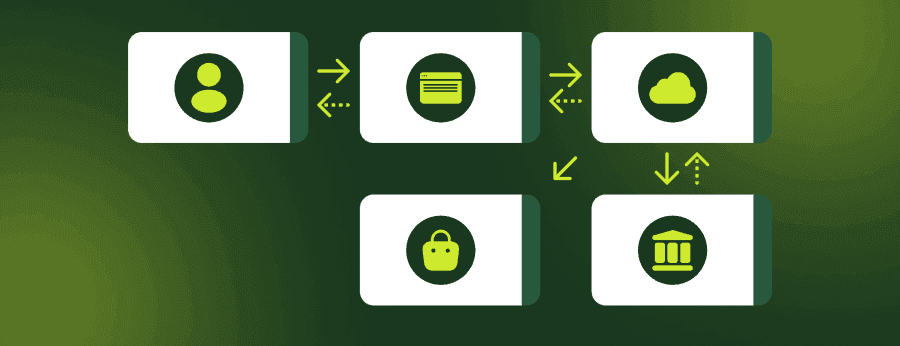
Initiation

a business initiates a payout request via an API or a dashboard: specifies the amount, currency, recipient (account, card, or wallet number), and the reason (salary, refund, commission).

Verification

the system checks the correctness of the details (account verification module, limit control, sanctions screening). In case of an error, it sends a notification for revision.

Routing and authorization

the payout gateway chooses the optimal channel (local bank transfer, SEPA, ACH, card network, or digital wallet). For card payouts, additional authorization may be required.

Debit and sending

the gateway initiates the debiting of funds from the settlement account of the business (or uses a pre-funded pool) and transfers the payment to the selected network. For large volumes, bulk processing is used.

Crediting

funds are deposited into the account of the recipient. The time depends on the method: instant settlement (a few seconds), T+1, or T+2.

Confirmation

the gateway returns the status (success / rejection / in processing) and all details of the transaction to the system of the business for reconciliation.

Example: a freelancing platform uses its Payoneer account to issue one-click $500 payments to designers who have completed their commissioned work. After passing payment gateway verification and routing through partner banks, the funds arrive in the recipient’s account in just one minute. This method eliminates the operating costs and extra fees tied to manual traditional SWIFT payments, and this type of instant payment adapts to core application scenarios including bulk payments, gig worker settlement, and emergency refunds.

Payout gateway vs payment gateway: what is the difference?

The main difference is the direction of funds.

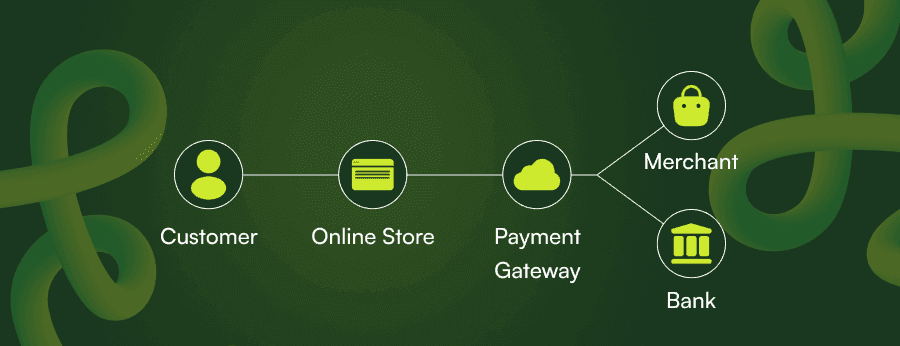
  • Payment gateway is a tool that processes payments flowing from customers to merchants. After a buyer completes payment on the checkout page, the tool transmits data to the acquiring bank, obtains transaction authorization, and completes the fund deduction from the relevant account. It supports payments via credit cards, UPI, digital wallets, and bank transfers.
  • Payout gateway, on the contrary, is responsible for outgoing payments — sending money from a business to a recipient: a supplier, employee, partner, freelancer. It manages disbursements, verifies the details of the recipient, supports bulk payouts, refund, cashback, commission, and incentive payments.

Use cases:

  • Payment gateway is needed by an online store to accept money for goods.
  • Payout gateway is needed by a marketplace (taxi aggregator, freelance platform) to send earnings to drivers and performers.

Most enterprises use payment gateways to receive customer payments, and disbursement gateways to pay commissions to their partners. Clarifying the differences between the two is a necessary prerequisite for building an enterprise’s own financial infrastructure and selecting service providers; mixing the two gateways up will lead to the failure to execute core business operations.

Payout payment gateway

Common payout gateway use cases for businesses

Refund

automatic refund of money to a client upon cancellation of a product or service. Without a gateway, a refund is processed manually, which takes days and irritates the buyer.

Cashback and rebate

marketing campaigns with the accrual of bonuses or partial return of funds to a card or wallet.

Commission

payouts to partners, affiliates, agents. For example, an online store pays bloggers a percentage of sales.

Payroll

payroll projects, especially for remote teams and international employees. Payout gateway can transfer money directly to cards or to digital wallets without opening a payroll account in a bank.

Freelancer payouts

freelance exchanges, platforms for finding performers (designers, copywriters, developers). After confirmation of the order, the platform sends the payment to the performer.

Marketplace payouts

aggregators (Ozon, Wildberries, merchant marketplaces). The platform collects money from buyers, retains a commission, and transfers the remainder to sellers through a payout gateway.

Expense reimbursement

reimbursement of expenses to employees (business trips, taxis, equipment). It is possible to set up automatic transfer to corporate cards.

What unites these cases is the necessity to efficiently send money to multiple recipients, control statuses, and simplify reconciliation. For global payouts (cross-border), global payout operations supporting currencies and local methods will come in handy.

Ready to Accept Online Payments?

How to choose the right payout gateway for your business

Integration fit

evaluate how easy it is to integrate the gateway with your current ERP, CRM, or marketplace. Ready-made plugins and a clean API will accelerate the launch.

Supported payout methods

does the gateway cover those methods of payouts that your recipients need: internal transfers, international SWIFT, cards, digital wallets? If you have a global audience, support for local methods is important.

Settlement speed

how quickly are funds are deposited into the account of the recipient? Instant or T+1? For payouts to freelancers and refunds, speed is important.

Cost structure

full cost: fee for each payout, subscription fee, commissions for currency conversion and refunds. Do not fall for hidden fees.

Transparency

availability of a dashboard and logs to track the status of each transaction. The ability to export reports for reconciliation.

Security & compliance

pci dss (if card data is processed), encryption, access control, compliance with local laws.

Market fit

does the provider have experience working with companies of your size and industry (marketplaces, fintech, gig-economy).

Support & SLA

round-the-clock support, reaction time, availability of a dedicated manager for large clients.

When purchasing a gateway, never prioritize low prices blindly. Low-cost solutions often suffer from problems including insufficient reliability and poor API quality. Users must strike a balance among price, functionality, and services, and those with security requirements can build a dedicated payment and settlement system.

payout payment gateway

Do some businesses need both a payment gateway and a payout gateway?

Yes, companies with two-sided flows often need both types of gateways. A classic example is a marketplace (aggregator) or a platform for services:

  • Payment gateway accepts money from buyers (incoming payments). After the order, the platform retains a commission and verifies the fulfillment of conditions.
  • Payout gateway sends the earned funds to sellers, performers, suppliers (outgoing payments). This can be a mass payout to tens and hundreds of recipients daily.

Other examples:

  • Gig-platforms for ride-hailing and on-demand delivery require their workers to receive payment immediately upon completing an order. Payments from end users are first collected through a payment gateway, then transferred to the workers’ accounts via a payout gateway.
  • Financial services with cashback — a client buys a product through a payment gateway, and then receives cashback through a payout gateway.
  • Crowdfunding platforms — fundraising through a payment gateway and subsequent transfer to the creator of the project through a payout gateway.

Using a payment gateway alone for payouts is inefficient: it is not optimized for mass transfers, queue management, verification of details, and monitoring of statuses. The separation of roles provides flexibility and transparency.

Frequently Asked Questions